My time with ART: Moving onto the next chapter.
fish pass river aire


My year with the Trust is coming to an end very soon, and what a year it has been. I am so grateful for being offered this awesome Industrial Placement during a very turbulent year, but also for the fantastic opportunities I can take away with me now back to the University of Leeds, and for my future. I would like to say a massive thank you to the ART staff and Trustees for taking a chance on me and accepting me into your team and also to all the people I have met along the way. Thank you.

I would love to tell you about every single thing I have done, been a part of or experienced this year, but we might be while. Therefore, I have a few wonderful highlights to tell you about instead.

My best bits…

  1. Mini placement on the fish pass site. The construction of the fish passes was all part of the DNAire project. For me this was really exciting. Not only was I able to wear a hard hat and steel toe boots for the first time in my life, but I learnt how to interpret blue prints, observe how to actually construct a fish passage and learn that nature will take it’s course, regardless of deadlines… Having only heard of a fish pass once before, I can now confidently explain to anyone that asks why we are doing it, the purpose and how important they are for migratory fish species like Atlantic Salmon.
  2. Volunteering on Thursdays and Fridays. I couldn’t not mention this. One of the best parts of my position was being able to assistant on work days across different sites meeting new people who all care for the environment as much as I do. I learnt new skills, how to use different tools effectively and made new friends who I hope to stay in touch whilst moving onto the next chapter.
  3. I helped form a collaboration with a local Youth Centre to teach young adults and children the importance of looking after watercourses, such as Haigh Beck, that feed into larger rivers and eventually the ocean. It was so inspiring to see how enthusiastic the groups were when doing activities such as litter picking. It reiterated the importance of why our work as a Trust is so important for so many different reasons.

volunteering river aire

Challenges I faced…

This year alone has been a very hectic year. It has taught me that some things are simply out of your control. I had to adapt, like many others to working from home. Which although it made delivering some of the things we would normally do, such as going into schools difficult, it never stopped us from coming up with alternative ways to connect with people. I was able to learn how to edit Youtube videos for the first time, create beer mats for our walks, help design our origami Christmas cards and assist on creating our DNAire interpretation boards along the river.

Things I have learnt…

Throughout my placement, I have learnt so much across a broad spectrum of things. Whether that’s how to build a fish pass to using new tools that I have never seen before and learning new skills, I can return to my final year at University saying that I can do so much more than when I started. I have learnt that rivers are so important in connecting people, places and things. They’re an integral part of local communities and provide us with so much biodiversity and life.

What would I change if I could?

I think the obvious answer to this question would be to rewind the clock and prevent the Covid-19 pandemic from happening in the first place. However, despite the turbulence, we were able to adapt as a trust and work with our volunteers to safely deliver events, run online educational sessions and still create great things. I would have loved to be able to go into schools and teach younger students about rivers using our river table and do some cool monitoring with them. That is still something I will look to doing in my future.

Oh I almost forgot, I am yet to see an Otter along the Aire, but I have spotted many Kingfishers now 🙂

walking river aire

Once again, I am so grateful for this amazing opportunity I was lucky enough to be a part of. Thank you to all of our volunteers, the ART staff for looking out for me and providing me with some awesome experiences and the Trustees for welcoming me with open arms. I will cherish my memories I have made this year for a very long time. Yorkshire has a special place in my heart now!

Hannah x

How to report Invasive Non-Native Species

Himalayan Balsam

Non-Native Invasive Species (INNS) are plants or animals that have been introduced to an area where they don’t naturally appear, either on purpose or accidentally by human activity. Along the Aire and within the catchment, you may be able to spot some Japanese Knotweed, Himalayan Balsam, Giant Hogweed and North American Signal Crayfish. These species have the ability to spread very quickly becoming the dominant species within the area or habitat they take over. Not only does this have hostile impacts on the environment and ecology, they also have economic and human health impacts. 

So how do you go about reporting INNS?

INNS Mapper is another great tool for reporting INNS sightings. Unlike the sadly no longer funded Plant Tracker app, this is better to use when you get home rather than on the go.  All you need to do is follow the link below and it will take you to the website. 

The site is used by local action groups or organisations tackling INNS.

https://innsmapper.org/home

The site is straight forward to use and they have tutorial videos you can watch to help you along the way found under ‘How to Guides’. All you need to do is set up a free account with them, make sure you’ve got the coordinates of where the species you spotted was and what the species is! There is an opportunity too add pictures to your survey should you wish. Below are some of the pages you’ll expect too see on INNS Mapper.

Alternatively, report to us! 

There are a few things we can do to help fight Invasive Species. During the summer months, we take groups of volunteers to ‘Balsam Bash’ along the riverbanks. This is a highly effective way of removing the plant from the area. It has been a great success at Kirkstall Abbey where we were a couple of weeks ago. In place of the Balsam, a great array of wildflowers and other plants have flourished! 

Japanese Knotweed and Giant Hogweed are treated professionally. They require being sprayed or injected with chemicals to remove them. This is done on the main river by the River Stewardship Company in Leeds and YorGreen in Bradford. However, some of our staff are trained to do this and we help Friends of Bradford Beck treat their catchment. If you see any, please let us know via contact@aireriverstrust.org.uk.

Giant hogweed bottom left image
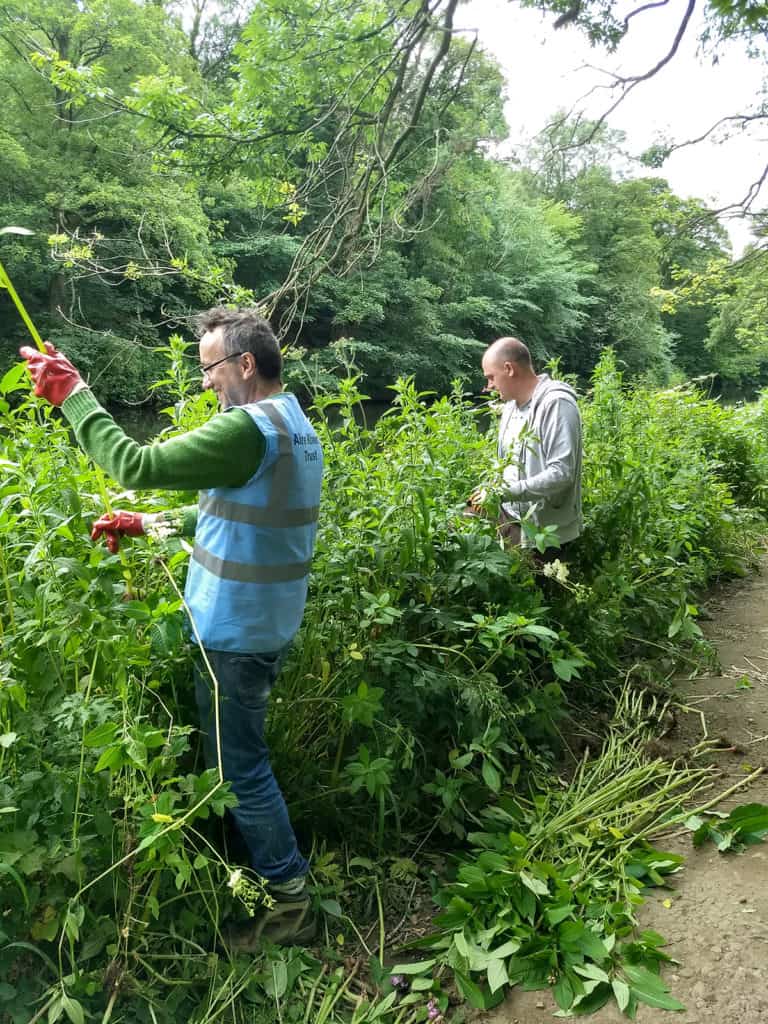
Here you can see ‘Balsam Bashing’ in action!
Giant hogweed top RIGHT image 1
This is Nick, our Community Engagement Officer, treating Giant Hogweed.

For more general advice follow the link below to the Gov.uk website to learn more: https://www.gov.uk/guidance/prevent-the-spread-of-harmful-invasive-and-non-native-plants

Equally, you could contact the Environment Agency with any concerns or queries regarding Invasive Non-Native Species:

Email enquiries@environment-agency.gov.uk

Telephone 03708 506 506

Volunteering: everyone benefits

Volunteering. Why do it?

Who is it benefiting? How do I get into it? Where do I start? What will I learn? 

Volunteering isn’t just the act of giving up individual time and labour to better the community. It is so much more than that. Despite the turbulent year 2020 was, we have had the most incredible help from so many volunteers. They’ve helped us plant over 1000 trees, pulled pollution from our rivers, restored pathways and hedges, taken part in some training events such as first aid and so much more. 

Buzz words that you often hear whizzing around the volunteering sphere are things like helping the environment, having fun, helping others, making friends and developing new skills. These are so important. But it is a way of improving your mental health, physical health, reducing loneliness and giving back to the world that has done so much for us all. The Rivers Trust described volunteering as a ‘nature-based prescription’. While breaking a sweat and making a difference to the environment, you’re healing your mind. You’re stepping out your comfort zone in all weathers, making connections with others. Let’s face it, we all need some human contact every now and then. 

What do our volunteers say?

Below is a couple of videos from our existing volunteers. In the week we shot these, they were laying a hedge at a site in Gargrave using billhooks, saws and other tools. 

This is Izzy, one of our river stewardship practical volunteers who joins us on Fridays.

Peter shares what inspired him to volunteer for us.

Join in

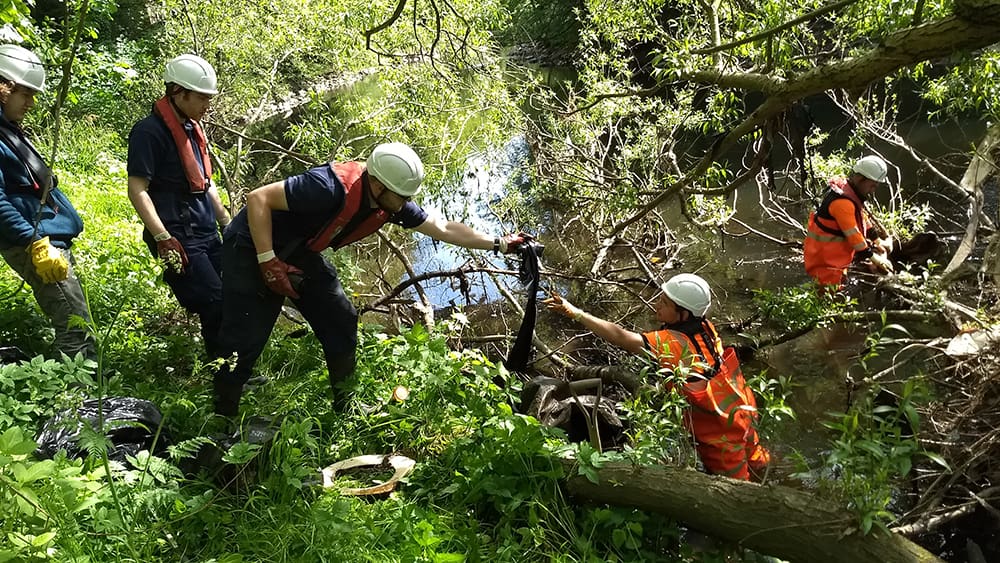
The beautiful thing about joining in on voluntary work is that you meet people who perhaps normally you wouldn’t get too. Share your stories and learn from one another. As a university student, I found myself surrounded by like-minded students wrapped up in a bubble of what meal deal am I going to buy myself today for the library. Or stressed about upcoming assignments and exams. But by taking part in the various activities, I have met fabulous people, learnt so many new things and am now a qualified first aider. Who would have thought I’d be able to help pull over 45 tyres out the river Aire? I didn’t that’s for sure! 

So, go on, get out into the community. Help where you can. I promise you; you won’t regret it. Sign up on our webpage.

How well do you know your birds?

Along the river Aire, a vast abundance of wonderful wildlife thrives off the habitats and interconnected ecosystems present. Birds are a primary example of this. Give our quiz a go and see how many you can answer correctly!

If you would like to try and spot some of these birds, we have a series of walks where you might be able to spot some of these amazing species.

Why not head out and try and catch a glimpse of one of our favourite river birds?

My Time at the Newlay Fish Pass Site

To quickly introduce myself, my name is Hannah, ART’s new placement student and I study BSc Geography at the University of Leeds. Starting my position with the trust during these unprecedented times was so daunting, however, I have enjoyed every minute of it so far. From meeting volunteers at our Friday workdays to creating videos with Abby, the last student. One of the major projects I get to be a part of is the DNAire, Developing the Natural Aire project. As a result of this, I was given the awesome opportunity to go and work at the Newlay Fish Pass site for two weeks, gaining insight into the daily operations that goes into engineering and construction. 

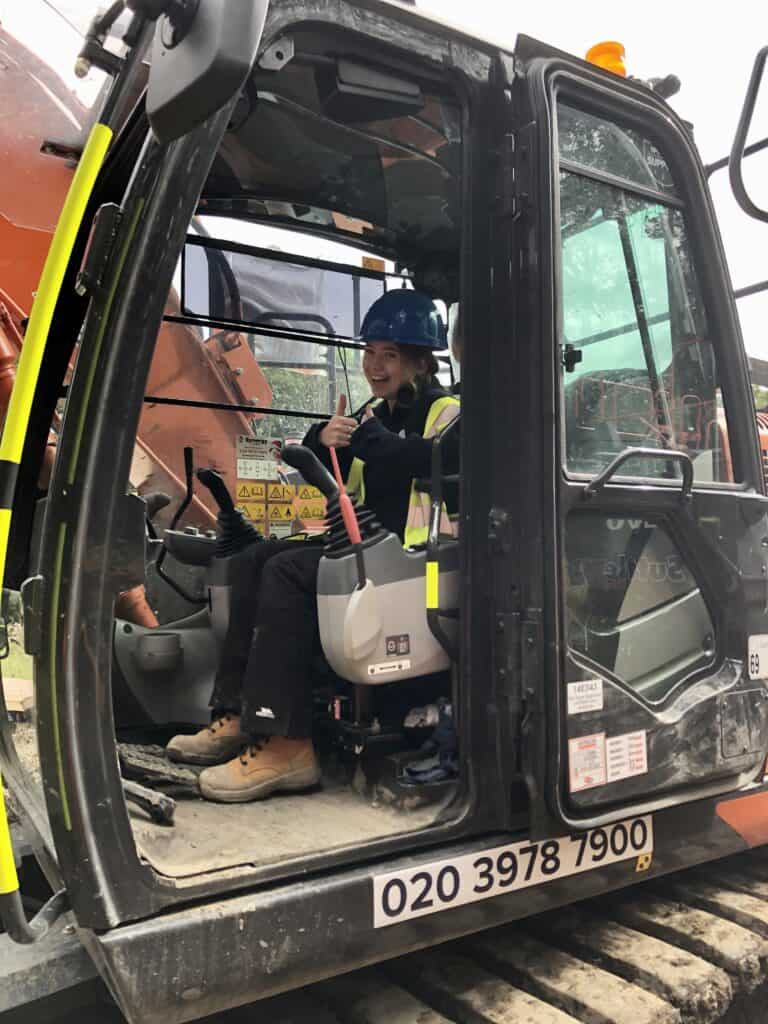
It was the first day at Newlay. I remember driving early Monday morning to get there and thinking my past 8-year-old self would never have envisioned me in a hard hat and steel toe boots, but 13 years later, here we are. The team working for Suttles, welcomed me with socially distanced arms and introduced me to the site. Before this, I have only ever seen a fish pass once. Now I was about to watch one being constructed. I observed how the machines operate to carry out different jobs, why different materials were used for different stages of the pass and the unpredictability of working alongside a river which can change the programme of the day within minutes. 

During the course of the two weeks, a few days of heavy rainfall led to the site flooding twice, halting work and slowing progression. Whilst the river levels were rising, the engineer on site showed me how to use the digital levelling equipment to help construct a basic flood risk model. Having used optical levelling equipment throughout my degree, using a more precise bit of kit was very exciting. I felt very cool. 

The fish passes along the Aire are Larinier Passes. These have aluminium baffles along the base to churn up the water, increasing friction ultimately slowing the rate of flow, allowing fish to swim up. A resting pool is positioned halfway up the pass, giving the fish time to rest before continuing their journey. This differs to the Eel and Lamprey side, which is made of tiles with cone structures, enabling individuals to manoeuvre between each cone. 

Mid construction photo at Kirkstall fish pass. These show the aluminium baffles used to churn up the water along the fish side of the pass.

All in all, I am very excited for the completion of all these passes and the benefits they will bring to reconnecting the river to the wider world. Thank you to Suttles, the Environment Agency and The Aire Rivers Trust for this awesome opportunity! 

Top