Himalayan Balsam pulling season

Each summer, Himalayan balsam (Impatiens glandulifera) appears again along riverbanks throughout the Aire catchment, and for our volunteers, that means balsam-pulling season is back.

At first glance, this tall plant with its bright pink flowers may seem attractive, but it is actually a problematic ‘invasive non-native species’, that negatively affects our rivers and watercourses. An invasive non-native species is a plant or animal that has been introduced to a country or area, spreads rapidly and causes harm to its new environment.

A stand of Himalayan Balsam in flower

Volunteers at the Aire Rivers Trust therefore spend the early summer months taking part in one of our most important and satisfying conservation activities – balsam pulling, also known as ‘balsam bashing’.

Why is Himalayan Balsam a problem?

Originally introduced to the UK as an ornamental garden plant, Himalayan balsam spreads rapidly along river corridors, canals and transport networks like railways and roads. It grows quickly from spring onwards, forms dense stands, and crowds out native vegetation, reducing biodiversity and leaving little space for wildflowers and other important riverbank plants.

In winter, unlike many native species, Himalayan balsam dies back completely, leaving bare soil exposed along riverbanks. Without deep-rooted vegetation to hold the soil together, banks become vulnerable to erosion during periods of high water and flooding.

Each plant can produce hundreds of seeds, which burst out of the seed pods in mid-late summer and spread far and wide, being carried downstream by rivers. This means that the plants (and the problem!) spread each year.

The power of volunteers

Despite being problematic for wildlife, Himalayan balsam is one of the easier invasive species to tackle. Its shallow root system means it can be easily removed by hand, simply pulling the plant from the bottom of the stem, before it sets seed. Every summer, volunteers from the Aire Rivers Trust head out to riverbanks, smaller becks and woodlands across the catchment to remove balsam and give native plants a chance to thrive again. These sessions are not only beneficial for local wildlife but are also a great opportunity to spend time outdoors, meet like-minded people and make a visible difference to the local environment.

A volunteer removing balsam from the riverbank
A small group of volunteers working to remove balsam from the riverbank
Solo volunteer balsam bashing

A catchment-wide approach

Managing invasive species requires working together and repeating the task each year. Seeds can travel long distances along rivers, so successful control relies on communities, landowners and volunteers working together across the entire catchment, over consecutive years. Many Rivers Trusts across the UK have shown that sustained annual balsam-pulling efforts can dramatically reduce the plant’s presence and allow native habitats to recover.

A group of volunteers celebrating their balsam bashing efforts
Himalayan balsam pulling is an easy activity suitable for all ages

Get involved

So far this year, we have pulled balsam at Fagley Beck in Ravenscliffe, Hawkstone, Chellow Dene and Pitty Beck, with more areas coming up in July. Some of these volunteer days been a part of our Roots in the River Project, funded by the National Lottery Heritage Fund. Thank you to the National Lottery, and a huge thank you to all of our volunteers for making this possible!

Whether you volunteer regularly or are looking to join us for the first time, balsam pulling is a great way to help nature in your area. No specific experience is required, and our team will help you with identifying and safely removing the plant. Sign up to volunteer here: Volunteer with Us – Aire Rivers Trust
Roots in the River: Celebrating Spring and connecting with nature!

Welcome to our blog series as part of our Roots in the River project, where we will be sharing different stories and experiences as the seasons pass by. First up – celebrating Spring and connecting with nature!

Having passed the spring equinox on Friday 20th March, spring is officially here! Over the past few weeks, we have seen shoots appearing, the first flowers of the year blooming, and that cold edge in the air has gone. Spring offers a great opportunity to get out into nature, connecting with the natural world to reap the well-being benefits it can offer. As the cold and shorter days of winter have passed, engaging communities with nature becomes easier, as many people are ready to be outside again, and the natural world becomes a more inviting place to be. Rivers are a great place to bring people together. For those of us involved in conservation work, surveying, or simply walking the same stretches of river regularly, spring is when everything starts moving again.

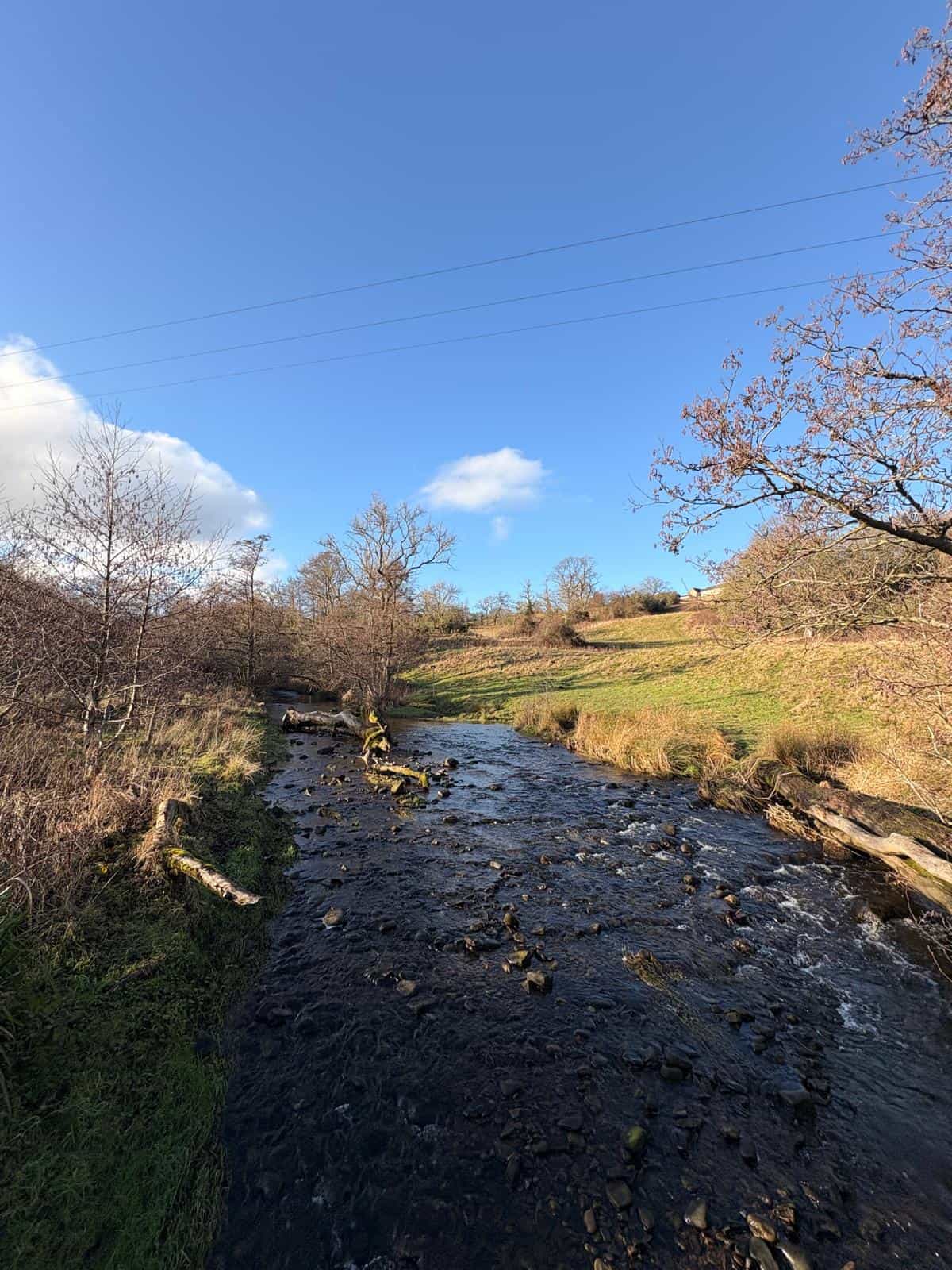
The wonderful North Beck in spring, near the Tinker Bridge in Keighley. © Anna Williams

Connecting with nature has been shown to provide us with many benefits, such as improved mental wellbeing, greater meaning and purpose in life, and more pro-environmental behaviours (University of Derby). Nature connection can be very simple, it is about the feelings you get whilst in nature. Spring is one of the easiest times of year to feel a real connection to nature, especially when walking by a river. The senses seem to wake up along with the landscape. The more time you spend in nature, especially in spring with longer days and warmer weather, the more you realise that nature connection comes from noticing small things, using your different senses to recognise them, and think about how this makes you feel. Standing by a river at this time of year, you are reminded that nature connection is not complicated, it involves simply being present long enough to see, hear, smell, and feel the natural world around you.

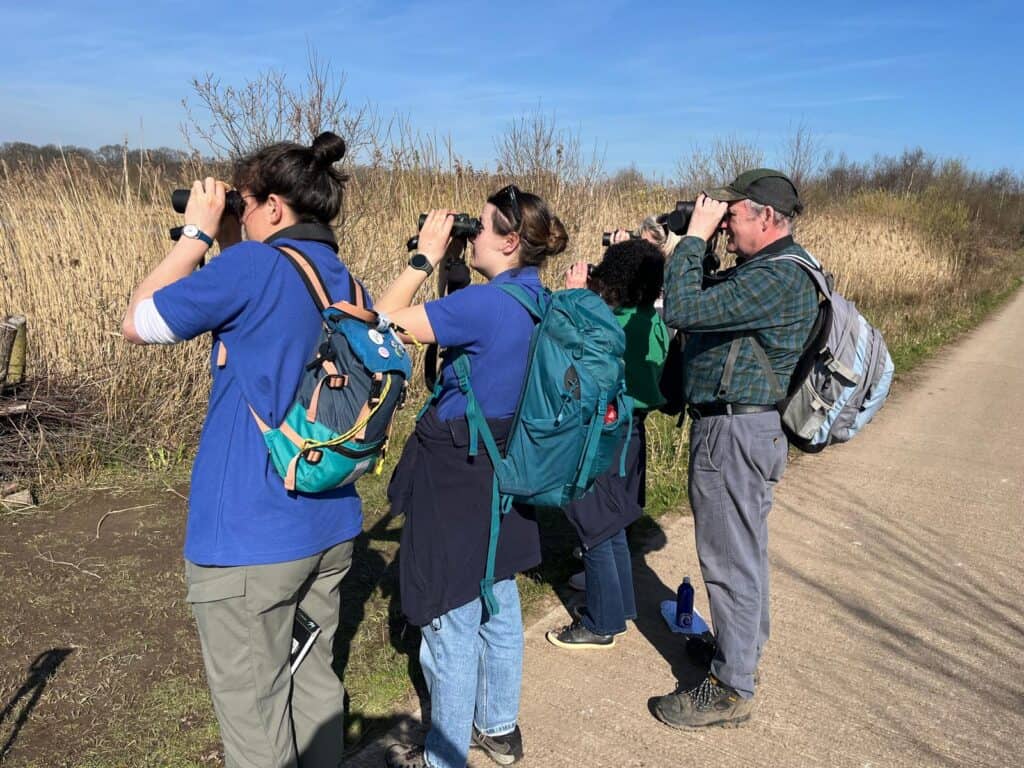
People wildlife spotting through binoculars on a river bank
Aire Rivers Trust staff connecting with nature and spotting wildlife at the RSPB St Aidens reserve on the River Aire. © Ruth McBain

Spring can also provide an excellent time to feel inspired! Through our Roots in the River project, we have recently run some river workshops with the Art4All groups at Keighley Healthy Living, where we explored different river themes and took inspiration from various photos and a visit to the River Worth. The groups are currently producing some wonderful river related artwork that will be displayed at an exhibition at the KHL centre on Saturday 25th April.

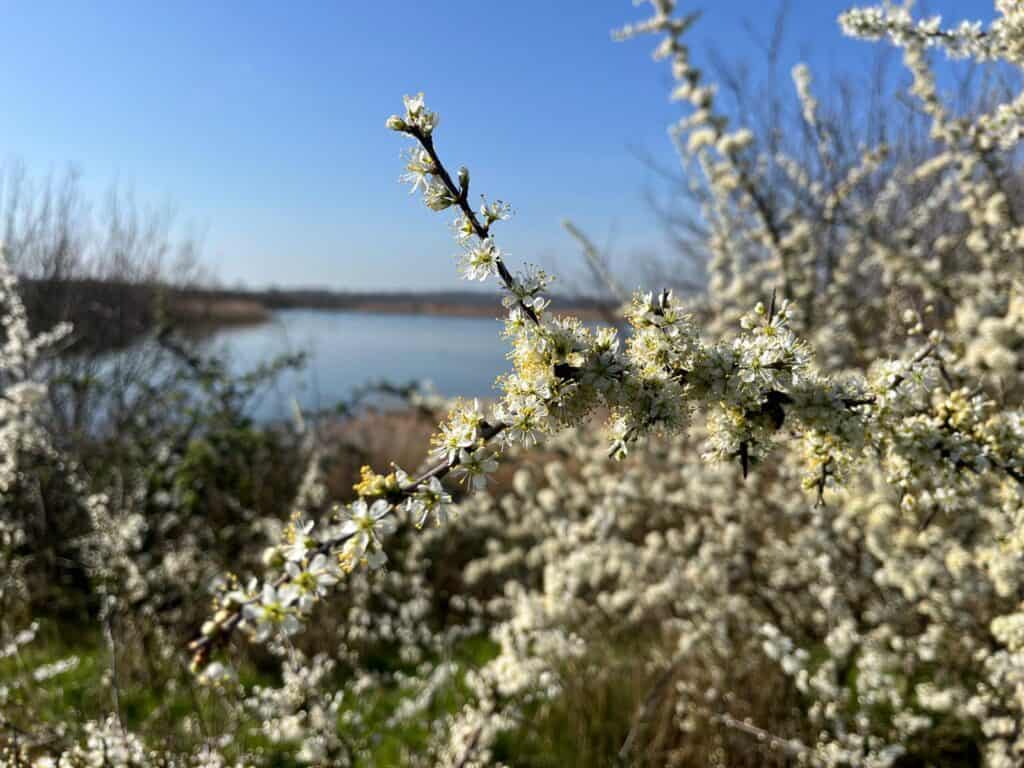
Blackthorn in flower with lake in the background

Next time you walk near your local river, or are passing by some nature, take time to notice and pay attention to any wildlife around you. You might notice new buds and shoots on ash, beech or oak trees, leaves emerging from alder, field maple and silver birch, or blossoms blooming on blackthorn and crab apple. Look out for pollinators too as they begin to move around to feed on newly grown flowers. Peacock, comma and red admiral butterflies can be spotted this time of year, and you could also spot beetles, spiders and ladybirds. You may also spot some special migrant bird visitors that return to the UK after spending the winter in warmer areas, including blackcap, chiffchaff and wheatear.

A beautiful blackthorn tree (Prunus spinosa) in full blossom. © Ruth McBain

At the Aire Rivers Trust, practical volunteer days, guided walks and surveying activities can help people notice things they might otherwise pass by. Why not join us on one of our very rewarding volunteer days, which run on Thursdays and Fridays, or help us with our citizen science monitoring programme. Find out how you could get involved to help nature here: https://aireriverstrust.org.uk/volunteer/

Other ways you can connect with nature this spring:

Find out more about the nature connection research here: https://www.derby.ac.uk/research/themes/zero-carbon/zero-carbon-nbs-research-centre/nature-connectedness-research-group/

Top